
When people ask me what video game I have been playing lately there’ a significant chance that the answer I give will fall into the roguelike genre. So why do I play so many roguelikes? I play a lot of roguelikes because I find them mechanically interesting and structurally very ergonomical as they fit very well in my increasingly busy life. The best roguelikes create a simple game ruleset with a clearly defined yet challenging goal. Within the framework of the game’s ruleset the designer’s layer in variety of unique mechanics that overlap and interact in interesting ways that allow the players to bend the rules of the game in their favor. To conquer roguelikes, players must intimately know the game’s ruleset and mechanics and be able to harness this knowledge to create an engine of synergistic perks that will compel through the ramping difficulty of the run and onward to success. Structurally most roguelikes are trying to create a short series of increasingly difficult challenges that culminate in under a few hours. Developers of roguelikes try to create a frictionless user interface that encourages players after each attempt to beat the game, also known as a run, to indulge in another try. Personally, I find parsing out the optimization and design puzzle of roguelikes to be quite enthralling. One could say roguelike’s are the emerging game genre of the decade and a quick review of the public’s Google searches and the steady growth of game listings in the genre on Steam tend to support that claim.

One thing roguelike games are typically not known for is their narrative prowess, since these games are usually focused on delivering a tightly wound mechanical puzzle for their players to parse out. The developers at Supergiant Games have always been known for their glossy, stylized narrative games, so with their first foray into the roguelike genre, Hades, they sought to do more than create a satisfying puzzle loop: they sought to tell a story. Hades masterfully tied its game elements, mechanics, and meta-progression to its characters from the greater Greek pantheon of gods and heroes. Players assume the role of Zagreus, a son of Hades looking to escape his father’s grasp, and each night he begins his ascent looking to escape Hell and reconnect with his family. As the player talks to and interacts with these mythic characters, the game’s mechanics and meta-progression elements slowly open up to the player, creating a sense that as your relationships with these characters grow stronger, so do your powers. This progression-through-fraternization system created room in the mechanics-focused genre of roguelikes for storytelling; drawing from timeless Greek myths, Supergiant Games delivered a game in Hades equally beloved for its narrative ambitions and mechanical excellence. Hades went on to be critically acclaimed and Supergiant Games’ best-selling game.
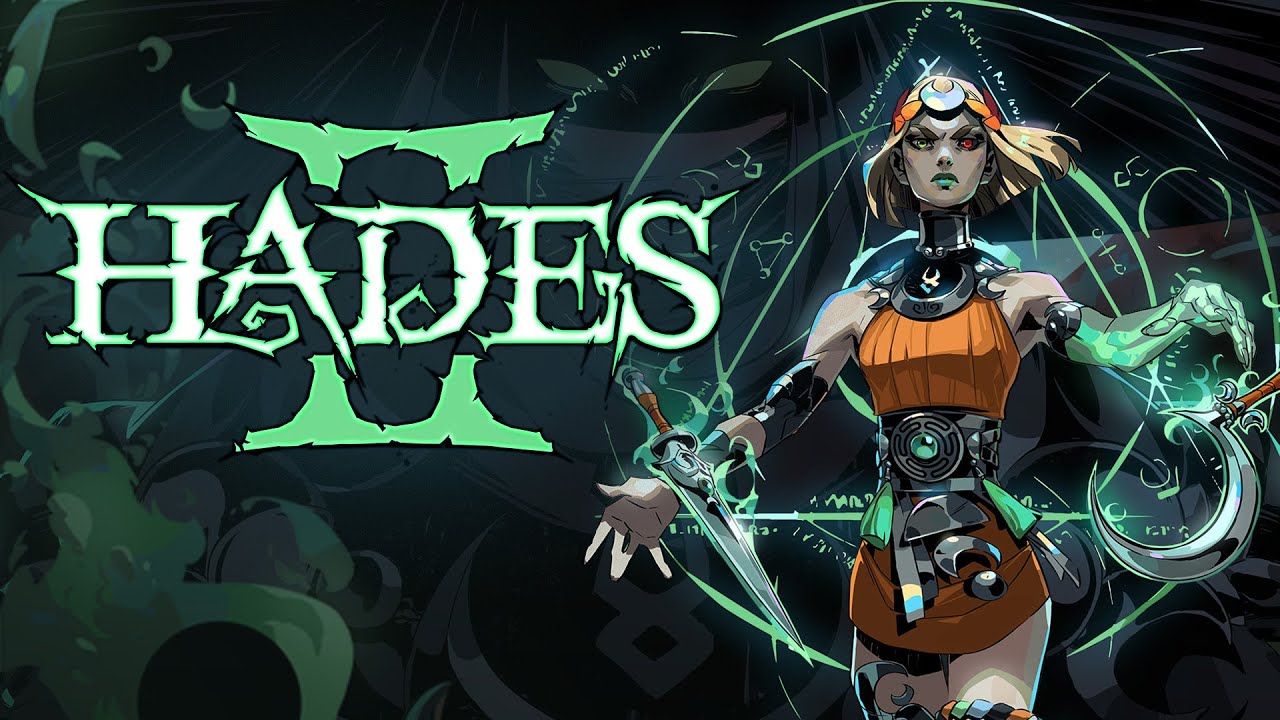
So, after such a critical and commercial success with Hades, what would Supergiant Games do for its succeeding game? At The Game Awards 2022, Supergiant Games announced their first sequel, Hades 2. This game would see us assuming the role of Melinoë, Zagreus’s sister and Hades’s daughter, as she looked to defeat the titan Cronus and set things right in her father’s domain. Hades 2 was launched into Steam’s Early Access program on May 6, 2024. Participating in the Early Access program allowed Supergiant Games to take their build of Hades 2 and refine it with fan feedback. This receptive period of development led to many changes, including rewrites of the characterizations of both Melinoë and Cronus. These rewrites really flesh out Melinoë and Cronus’s relationship and motivations and dramatically improved the original narrative ending that felt rushed and, ironically, overly reliant on the deus ex machina trope. On September 25, 2025, Hades 2 went gold with its 1.0 release signaling it’s exit from Early Access program and it’s expansion onto new platforms like the Nintendo Switch 2.
Hades 2 is a great sequel, but how does it stack up to its much-lauded forebear? Hades 2 aspires to build upon the first game’s progression systems to create an experience with more mechanical depth while simultaneously creating a system that better allows players to tailor the game’s difficulty arc to their skill level. To see the true ending in Hades required players to complete 10 successful runs; Hades 2 sees this system return but with a new wrinkle. In Hades 2 players must complete 8 descent clears against Cronus and complete 4 ascension clears summiting Mount Olympus. By offering two different types of runs, the developers have provided the player with more variety and replay value. The progression-through-fraternization system returns and, with certain gods, heroes, and events each initially tied to either an ascension or descension run, it creates an incentive for players to explore both paths in tandem. If a player is struggling with an element on one of the paths, it can be helpful to have another option that you can test your mettle against while gathering resources to get stronger.
Speaking of getting stronger, the choice to replace the Mirror of Night from Hades with the Arcana Cards progression system in Hades 2 was a stroke of genius design. The Mirror of Night was a pair of skill trees that allowed players to mix and match skills from each slot, creating a unique skill tree catered to their playstyle.

The Arcana Cards progression system in Hades 2 takes the customization options to the next level. By replacing the mirror’s 2 skill trees with 12 slots with a deck of 25 Arcana cards, they have created a much more customizable and powerful meta-progression system. The acquisition and upgrading of the Arcana Cards are tied to unique resources the player earns by defeating specific bosses that serve as gatekeepers between the acts of the ascension and descension paths. The inclusion of these boss resources gives shape to players’ meta-progression and helps keep players engaged. As players work toward their smaller goals of resource gathering for meta-progression, they are also incrementally developing their skills as players, which in tandem leads to a much smoother progression experience overall.

The Arcana cards are also cleverly limited in two ways to create a balanced system. The players’ card selection is limited by their grasp point pool, with Arcana cards costing between 0 and 5 Grasp points. To activate the Arcana cards with a 1 to 5 cost, the player must have unlocked the card and have sufficient grasp points in their pool. However, unlike the other Arcana cards, the 0 Grasp point Arcana cards, which tend to have very powerful effects, all have conditional rules which must be met for the card to be active. Many of these rules have conflicting requirements, with each of these cards nudging the players toward activating cards along rows, columns, position, or Grasp point cost to reap their benefits.
I think Supergiant Games was able to deliver a sequel in Hades 2 that delivers more to the players in every aspect. More variety in boons of the gods. More complexity and customization in the progression systems. More variety in the runs with two routes to explore that are skillfully intertwined with the narrative. They even gave us more members of the House of Hades, with their own messy intergenerational conflicts. These new conflicts that fuel Hades 2 are additive to the narrative of the series without undoing or undermining the first game’s story, and that’s to be celebrated. I’d strongly recommend Hades 2 for roguelike fans and newcomers alike., but how does it stack up to its much-lauded forebear?